Avoid, reduce, store, inspire: Our carbon plan
How we're going 'all in' on carbon negative by 2040

Key Takeaways
Interface is building on over 30 years of climate action with a plan to avoid, reduce, and store more carbon than ever.
Our goal is to become carbon negative by 2040 without relying on offsets.
Carbon negative carpet tile proved that products can store more carbon than they emit from raw materials through manufacturing.
We are at an inflection point in the climate crisis. More than 30 years ago, our founder, Ray Anderson, faced a question that changed Interface: What is your company doing for the environment? That question pushed us to rethink how a flooring company could operate, innovate, and lead.
Since then, we’ve built sustainability into how we design, manufacture, and source our products. From modular design and glue-free installation to captured carbon materials and carbon negative innovation, we continue to turn climate ambition into real progress across our products.
What has interface learned from decades of climate action?
Carbon negative carpet tile changed everything. It proved that product design and material innovation can make it possible for a product to store more carbon than it emits from raw material extraction through manufacturing.
The lesson is clear: direct emissions reduction matters. And when we pair it with carbon storage in our products, we can go beyond reducing impact and help move the industry toward low-carbon, carbon-storing solutions.
How will we become carbon negative?
We’re all in on becoming carbon negative by 2040, without offsets. That means prioritizing direct carbon reduction and carbon storage across our products, operations, and supply chain.
Our carbon plan is simple: Avoid. Reduce. Store. Inspire.
- Avoid the emissions we can by making better choices across our products, operations, and supply chain.
- Reduce the emissions we cannot avoid through raw material, manufacturing, and business improvements.
- Store more carbon in our products by replacing higher-footprint materials with low-carbon and carbon-storing alternatives.
- Inspire others to take direct action and accelerate progress across the industry.
Our 2030 science-based targets (SBTs) are an important milestone on that path. We’ve already reduced emissions categories with SBTs by 42% compared to our 2019 baseline, and we’re continuing to focus where we can make the greatest impact: product design, raw materials, manufacturing, circularity, and supplier collaboration.
Where we’re investing next
The products we make account for more than 85% of our footprint. To change that, our approach has to be bigger than one material, one innovation, or one product. It has to address the full life cycle: design, materials, and renewal. As a result, we are:
- Designing products to use less material, last longer, and stay in use.
- Replacing higher-footprint raw materials with recycled, bio-based, captured carbon, low-carbon, and carbon-storing alternatives.
- Scaling circularity across product categories and regional markets through take-back, reuse, recycling, and material recovery programs.
- Working with suppliers to improve data quality, lower Scope 3 emissions, and accelerate low-carbon material innovation.
- Using transparency, education, and collaboration to inspire broader climate action across the building industry and beyond.
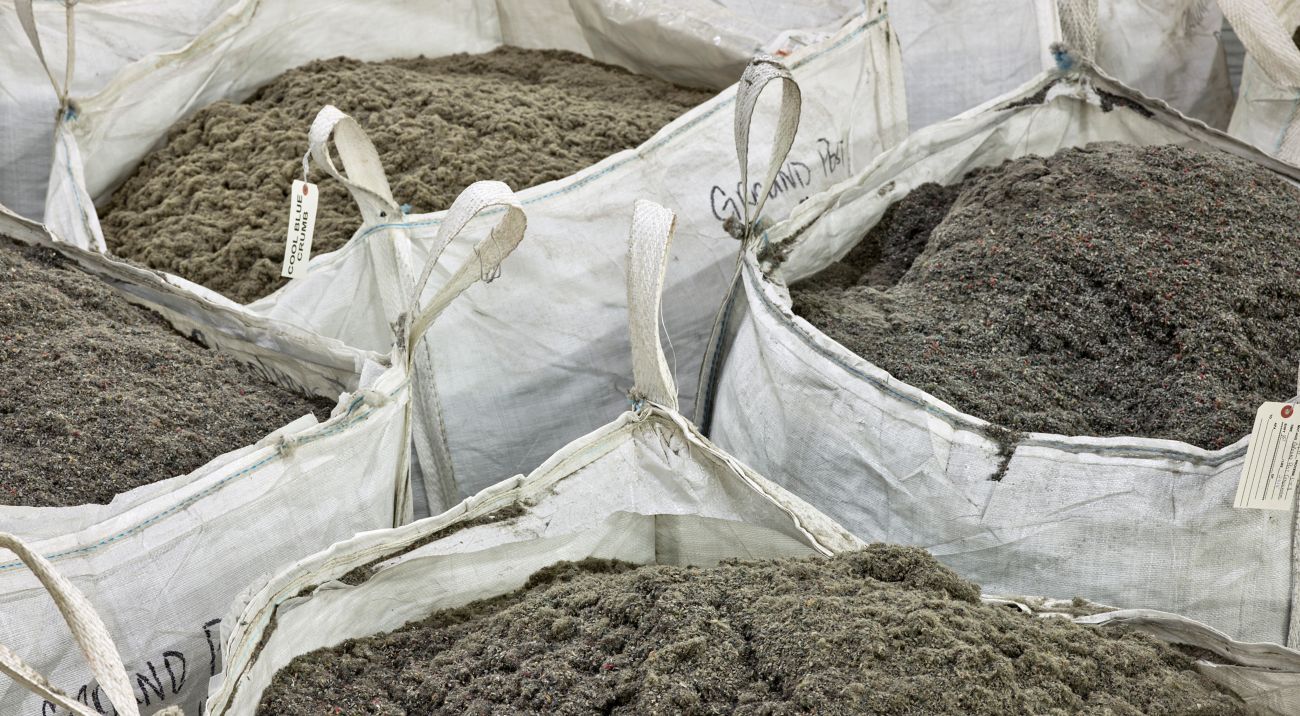
This is how circularity supports our carbon plan. Good design helps products use less, last longer, and stay in play. Better materials help lower embodied carbon from the start. Renewal programs help keep products and materials in use for as long as possible.
We’ll keep sharing more as our strategy unfolds: what works, what we learn, and where we still need to go. That transparency is how we create the ripple effect Ray believed in. And it’s how we keep pushing toward a carbon negative future, together.
About the Author