Can we measure social impact like we measure carbon?

Key Takeaways
Every material has a story beyond its environmental footprint.
A pilot Social Life Cycle Assessment explored the people, communities, and systems connected to natural rubber sourcing.
Understanding those connections can help inform responsible sourcing conversations.
Architects and designers have access to more product impact information than ever before.
Environmental Product Declarations (EPDs) help quantify environmental impacts. Material disclosures such as Health Product Declarations (HPDs) reveal product content. Together, these certifications provide greater visibility into product impacts.
But what about the people and communities connected to materials?
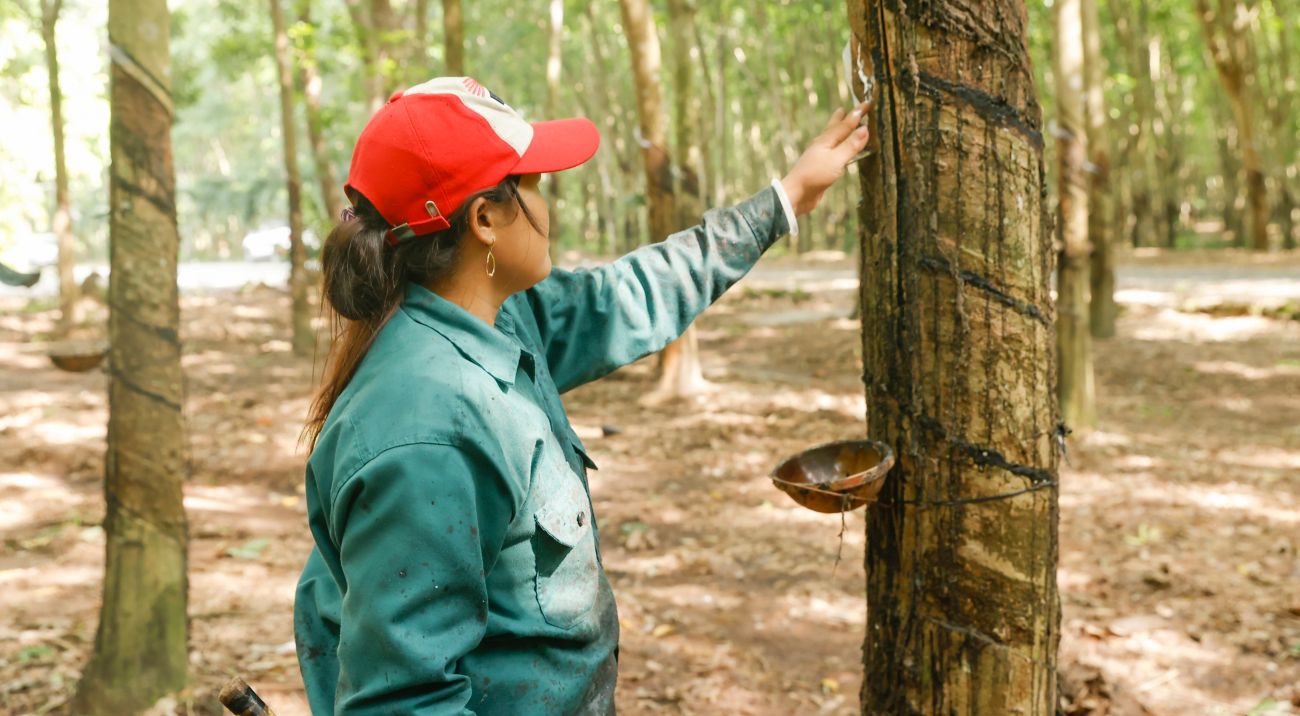
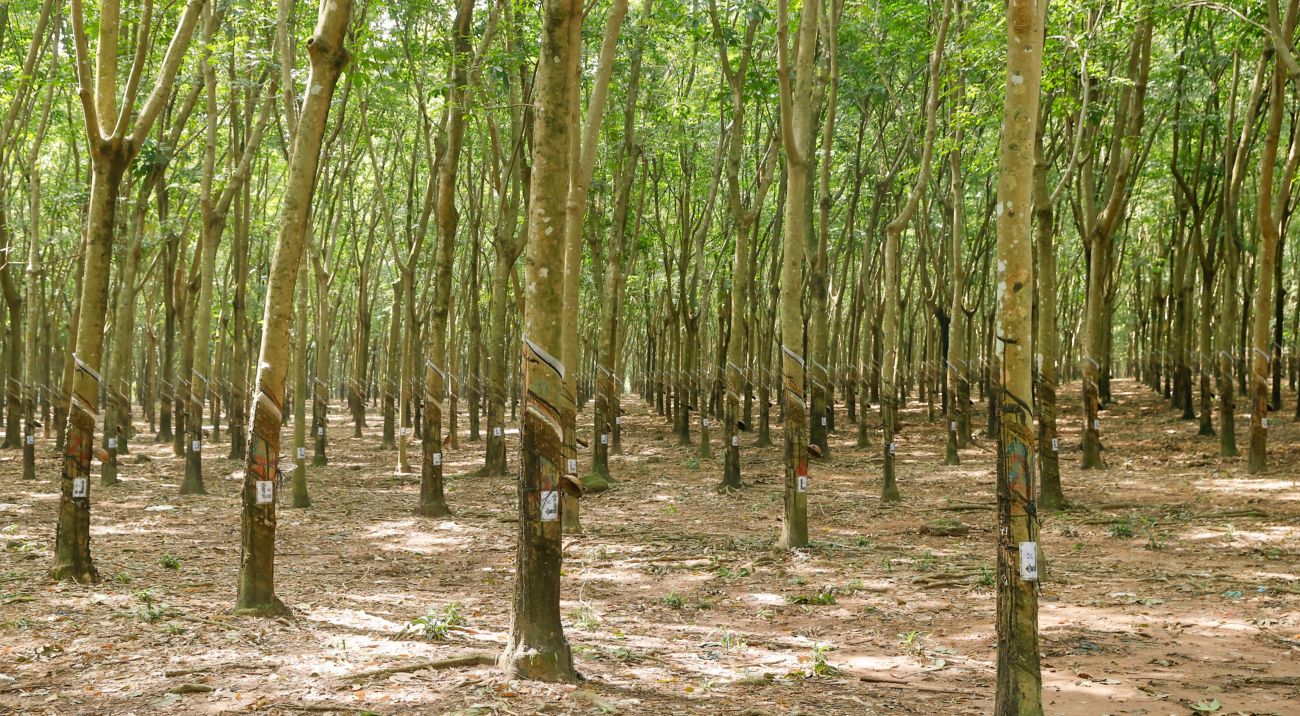
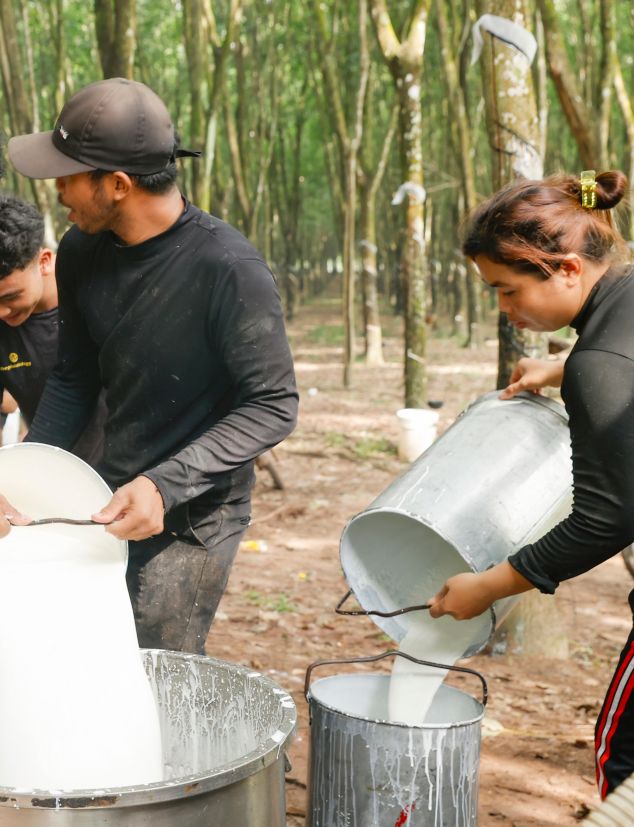
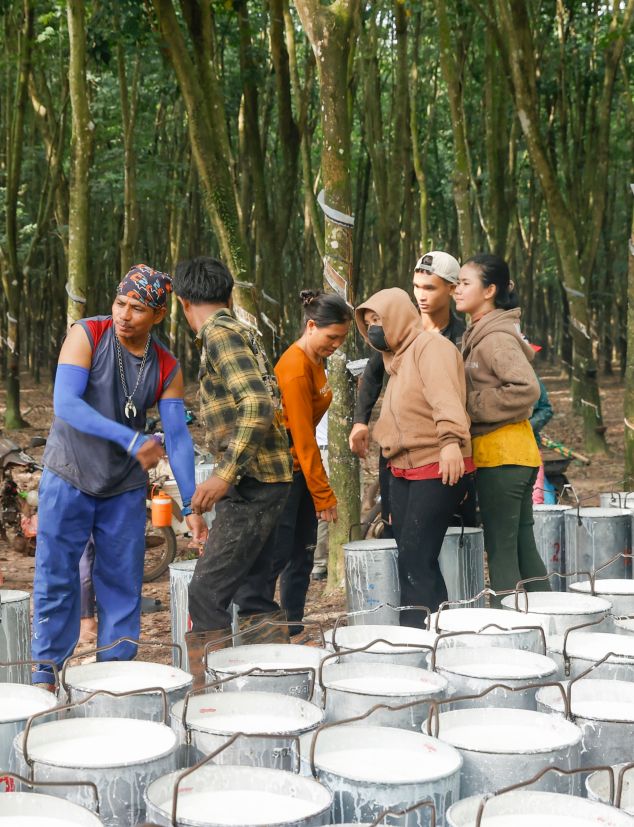
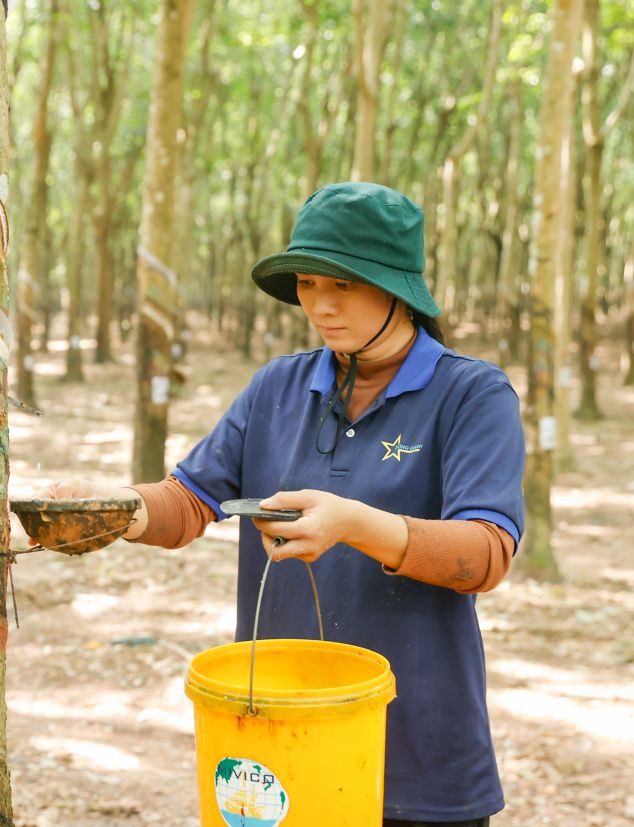
Natural rubber sourcing supports farmers, workers, households, and local communities. In southern Vietnam, work can begin long before sunrise. Rubber trees are tapped during the cooler early morning hours, and the material is collected before temperatures rise. For the families and workers involved, these routines are part of both their daily lives and their livelihoods.
Understanding product impact means looking beyond what's in a product. It means understanding the people behind it.
At Interface, our path to carbon negative by 2040 depends on innovation, transparency, and collaboration across our supply chain. That's one reason we're exploring new ways to understand the social conditions associated with our materials.

Connecting material to community impact
In 2024, the International Organization for Standardization (ISO) published ISO 14075:2024, the first international framework specifically designed to guide Social Life Cycle Assessments. The framework creates a structured way to evaluate social conditions connected to products and materials across a value chain.
Interface applied this framework as part of a pilot Social Life Cycle Assessment (S-LCA) focused on natural rubber used within select nora® by Interface flooring products.
We set out to learn more about the social conditions associated with one of our raw materials and establish a baseline that can help inform responsible sourcing decisions over time.
That meant going beyond datasets and spending time where natural rubber sourcing begins, speaking directly with the people connected to the material and their communities.
The assessment included:
- Workers
- Farmers
- Local communities
- Supply chain relationships connected to natural rubber sourcing and processing
The pilot is an early example of how social impact measurement can be applied within a material supply chain using a structured international framework. It is also the first ISO-compliant S-LCA carried out by a flooring manufacturer focused on natural rubber sourcing with a supplier.
Understanding social impact requires going beyond the data
Many social assessments rely on existing research, industry data, and broader country-level information.
Those sources are valuable. But social impacts are often highly local and context specific. What appears true at a national level may not accurately reflect conditions within a specific community, workplace, or supply chain.
Natural rubber illustrates this challenge. Long before it becomes a flooring product, natural rubber passes through a complex network of farmers, workers, processors, traders, and manufacturers.
Understanding those relationships requires looking further upstream, where many social impacts may occur. To learn more about the conditions connected to this particular supply chain, Interface:
- Visited locations connected to natural rubber cultivation, collection, and processing in Vietnam
- Conducted site visits and interviews with workers, farmers, and community members
- Examined social topics including wages, working conditions, health and safety, training, livelihoods, worker communication, and community impacts
- Assessed findings against relevant laws, international norms, and the ISO framework
This direct engagement added firsthand perspectives to the traditional data sources used in the assessment. Together, they provided more specific insight into the experiences of people connected to natural rubber sourcing and processing.
The human side of material transparency
Environmental data and material disclosures have transformed the way we understand products. Social impact information has the potential to add another layer to that understanding.
While architects and designers often encounter materials near the end of their journey, many of the impacts connected to those materials happen much earlier, where raw materials are grown, harvested, processed, and traded.
This pilot provided a clearer view into the natural rubber supply chain, from the tree through shipping, as well as the people involved along the way.
For architects and designers, this information can support more informed conversations around responsible sourcing, material transparency, and responsible specification.
Better visibility creates better decisions
The goal of this pilot was not to provide all the answers. It was to better understand where we are today and where we can drive progress next.
The assessment identified strengths – and opportunities – that can inform future engagement and continuous improvement efforts:
Strengths
We identified several encouraging findings:
- Workers earned approximately 2.41 times the regional minimum wage benchmark
- Many farmers reported relatively stable livelihoods connected to natural rubber production
- Long-standing trading relationships were built on trust and collaboration
- Community support initiatives contributed to positive local outcomes
Opportunities
The assessment also showed us opportunities to strengthen consistency, communication, and engagement over time:
- Strengthening communication and implementation of health and safety practices
- Increasing training frequency and awareness
- Improving communication of employee benefits
- Strengthening worker feedback mechanisms
- Supporting gender representation and equal opportunity practices
Some findings reinforced positive practices already in place. Others highlighted areas where continued engagement and collaboration could support improvement. Both are valuable.
The more visibility we have into material supply chains, the better positioned we are to identify opportunities, support improvement, and make informed decisions about where to focus next.
Social impact measurement starts on the ground
Sustainability measurement continues to evolve.
For years, organizations have expanded their ability to measure and disclose environmental impacts. Social impact measurement represents another opportunity to better understand material supply chains and the real-world conditions of the people behind them.
This pilot also continues Interface’s history of exploring new approaches to transparency. Just as environmental disclosures have expanded our understanding of product impacts, social impact measurement can help reveal another part of a material’s story.
As an architect and designer, this matters because design decisions influence demand. Demand influences supply chains. And supply chains influence people and communities.
You don't need to become a supply chain expert. But you can ask better questions:
- Where do the materials in this product come from?
- What do we know about the people connected to material sourcing and processing?
- How is the manufacturer engaging suppliers over time?
- What information exists beyond environmental impact data?
- How does this support responsible sourcing and specification decisions?
Interface's pilot demonstrates how social impact information can contribute to a broader understanding of material sourcing and transparency.
Because greater transparency isn't simply about knowing more about materials. More informed specification decisions require a better understanding of both the environmental and social impacts behind them.
About the Author