Trends in Motion

Key Takeaways
Design trends are easier to spot when you consistently collect inspiration from multiple sources.
Capturing ideas in the moment helps turn everyday observations into future design opportunities.
Organizing inspiration by theme, project type, or design element helps reveal emerging trends over time.
Trends evolve. That’s their whole thing. But how do you keep up and get ahead?
You build an inspiration archive, of course. Getting started is easy. The real test? Maintaining a process that works best for you. Here’s how.
Find your favorite place to track trends
Inspiration looks different for everyone. Be intentional about monitoring the channels that feel right for you. You can start with:
A&D industry
Tradeshows, A&D Magazines, and Market Reports.
Our designers recommend:
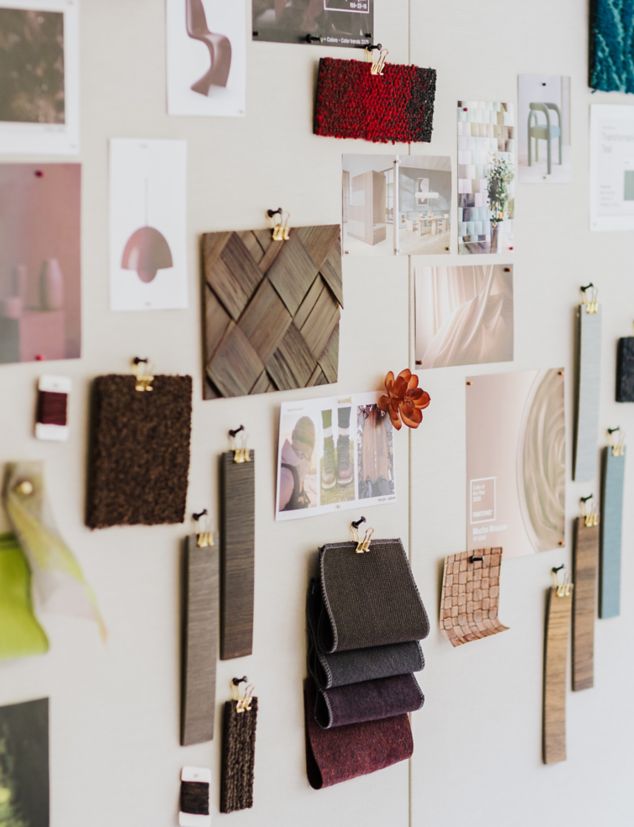
Social channels
Instagram®, Pinterest®, YouTube®, and more.
Our designers follow:
Multimedia sources
Magazines, Podcasts, TV Shows, or Movies.
Our designers recommend:
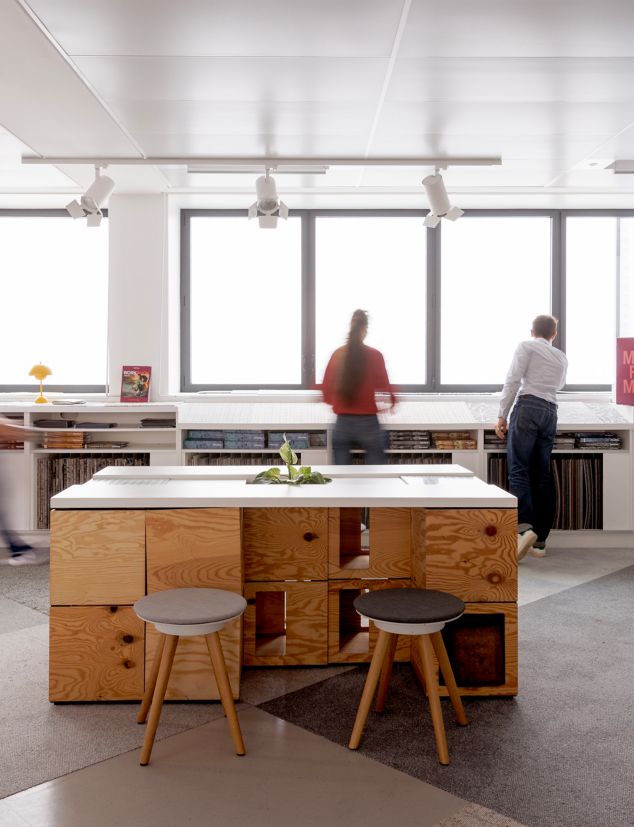
Life around you
Nature, Hotels, Restaurants, or Cities.
Our designers find time to explore:
- Science
- Art Exhibits
- Fashion Shows
- Architecture
- Antique Shops
- Furniture
- Fabric Stores
- Their Own Neighborhood
Capture your inspiration in real-time
What’s the best way to capture your favorite trends? Well, that’s up to you. Here are a few ideas:
- Use that phone! Out and about? Take a photo.
- Scrolling social media? Grab a screenshot.
- Sketch it out if a photo isn’t enough.
- Record a voice memo to remind yourself why something caught your eye.
Organize your inspo (or risk losing it!)
Inspiration is useless if you can’t find it later. Creating a dedicated “Inspo” folder helps, but go further and organize by:
- Category: Think materials, color palettes, lighting, textures, and patterns.
- Project Type: It could be hospitality, workplace, healthcare, or retail.
- Mood/Theme: For example, mid-century, biophilic, or neutral.
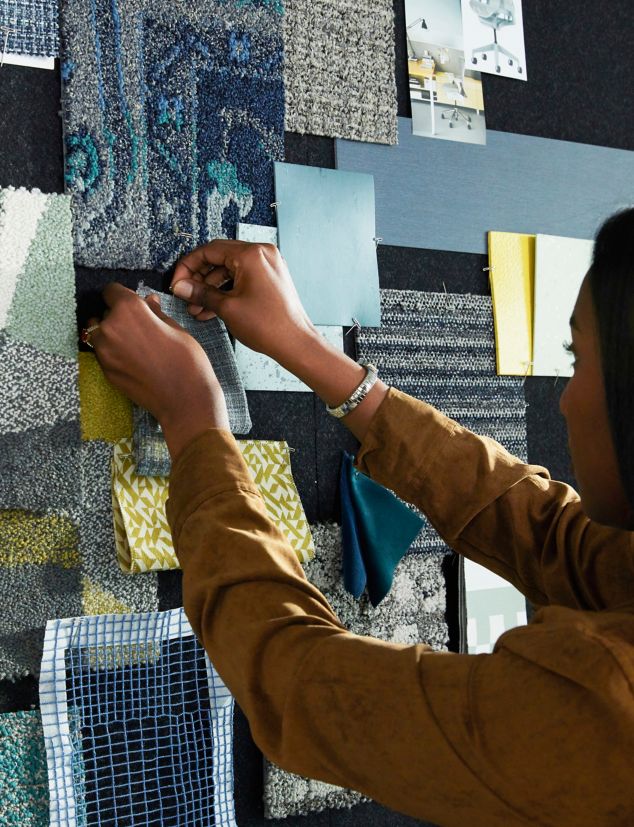
"I keep an old school accordion file of physical printouts, tear sheets, material samples, trends, and visuals that catch my eye. If I start to see the same motif or mood pop up in a few different places, that signals to me that it’s something worth tracking. And I start to ask myself what it means for us. Should we integrate into a product? Inspiration board?"
– Katherine Cohen, Associate Creative Director, USA
FUEL YOUR CREATIVE FIRE
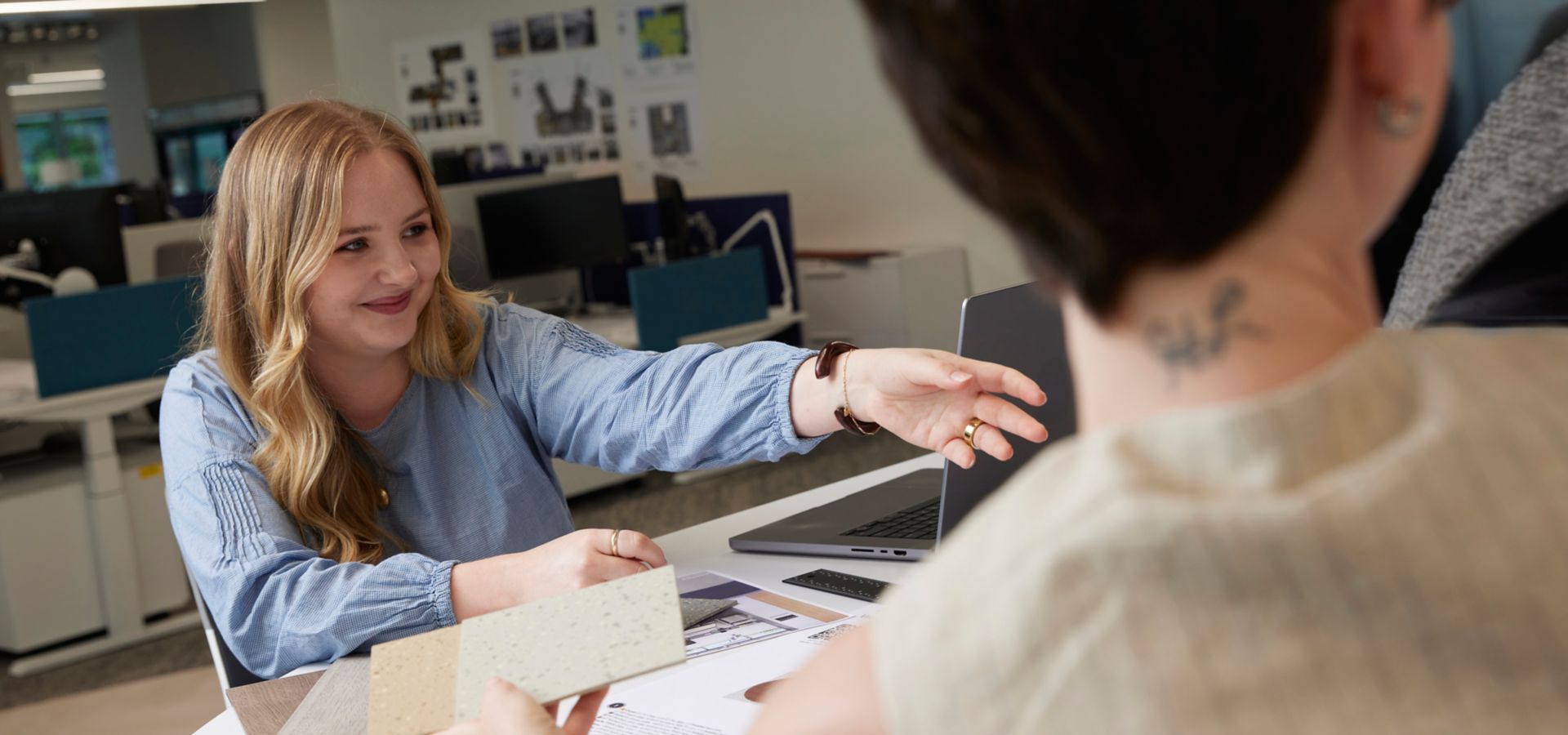
We asked Interface’s design experts to share how they keep ideas flowing. This guide distills their insights into practical tips you can revisit anytime.
DOWNLOADAbout the Author