
Circularity Spotlight: Rethinking Design With Bio-Based Innovation

KEY TAKEAWAYS
- Circularity starts with what you specify, shaping carbon, performance, and longevity outcomes.
- Lower carbon comes from choosing better materials and designing products to last longer.
- Designing for renewal and simple installation keeps materials in use and reduces waste over time.
Design has always been about solving problems. Today, one of the most important challenges is carbon.
Circular design asks us to rethink how products are made, used, and renewed. That means using fewer virgin resources, keeping materials in circulation longer, and reducing waste along the way.
At Interface, circularity is key to our ‘all in’ strategy to become carbon negative by 2040. One innovation helping accelerate this work is bio-based materials. These materials store carbon and limit reliance on fossil-fuel-based inputs.
By combining bio-based innovation with circular design principles, we’re working to create flooring solutions that help customers reduce carbon while supporting the development of more carbon-storing and low-carbon materials.
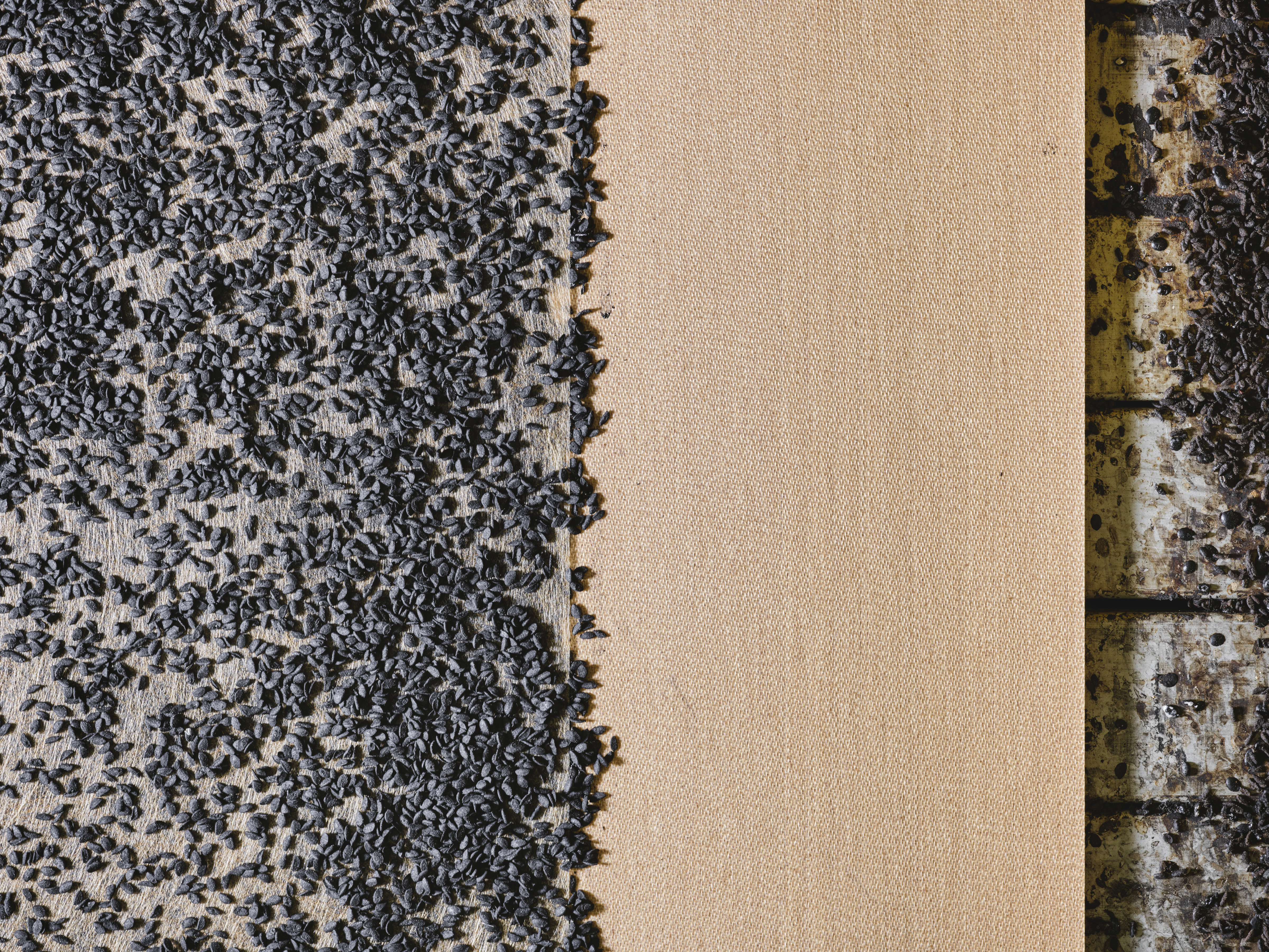
© Christopher Payne / Esto
WHY BIO-BASED MATERIALS MATTER
Bio-based materials are made primarily from substances derived from living organisms. What makes them so powerful? Carbon.
Carbon is the backbone of life and one of the most abundant elements on Earth. In nature, plants absorb carbon dioxide (CO₂) from the atmosphere through photosynthesis, storing it in their roots, stems, and leaves. Over time, when those plants decompose, the carbon they stored is typically released back into the atmosphere.
Bio-based materials give us a way to change that cycle.
By using renewable, plant-derived ingredients primarily sourced from waste and by-products, we can keep that carbon stored in our products instead of releasing it back into the atmosphere. This helps:
- Lower the carbon footprint of products
- Reduce reliance on fossil-based materials
- Enable the development of carbon negative products
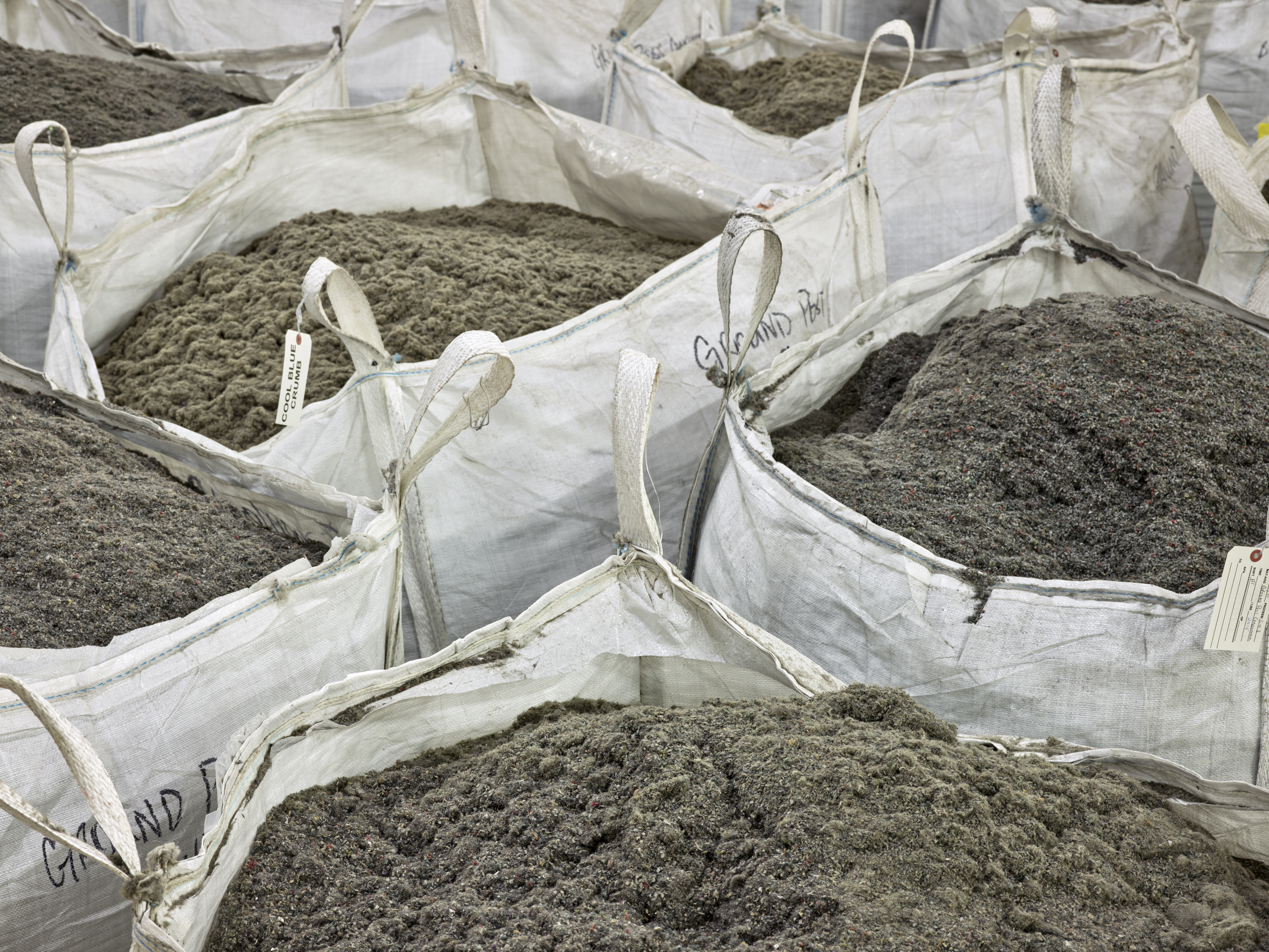
And we take this approach even further. Through regional product reclamation and recycling programs, used carpet tiles can be returned and turned into new materials, keeping them in circulation and reducing the need for virgin raw materials, one of the biggest drivers of embodied carbon.
This shift matters. The built environment is responsible for nearly 40% of global greenhouse gas emissions, with embodied carbon, or the emissions from manufacturing and transporting materials, representing a significant portion of that impact. That means material choices play a critical role in reducing those emissions. And with carpet having one of the highest carbon footprints per unit of any material on average, specifying the right flooring for circularity – such as low-carbon or carbon negative options – is a great place to start.
YOUR MATERIAL CHOICES MATTER
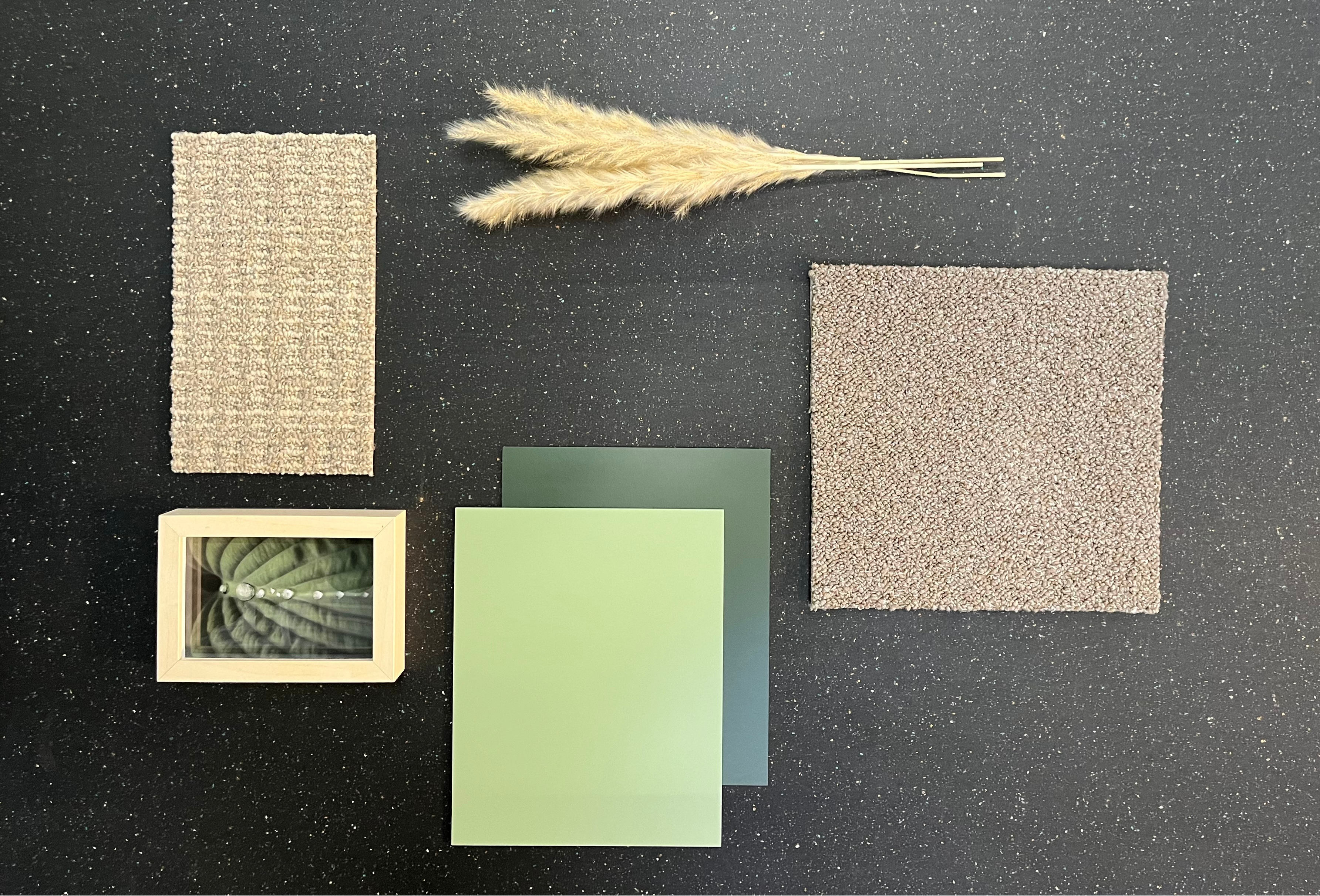
For architects, designers, and building owners, material choices can make a real difference in meeting sustainability goals.
Specifying flooring with bio-based and recycled materials can help:
- Lower the embodied carbon of your projects
- Support circular material flows
- Contribute to sustainability certifications and climate commitments
- Align with long-term carbon reduction strategies
Because flooring covers large areas within a building, selecting lower-carbon materials can have a meaningful impact on the overall environmental footprint of a project.
And understanding that impact shouldn’t be complicated. That’s why we’ve made it easy to see the difference your choices make with our carbon calculator. It shows the style-specific carbon footprint of specifying Interface for your projects and compares it to industry averages. You can quickly see the carbon savings when you specify for circularity.
In fact, according to Interface life-cycle assessment modeling, customers who specified our low-carbon flooring solutions in 2025 helped avoid nearly 345,000 metric tonnes of carbon emissions compared to industry averages.
HOW WE'RE USING BIO-BASED INNOVATION
Bio-based materials play a growing role in helping Interface reduce the carbon footprint of our flooring products.
One example is our proprietary CQuest™ backing. It incorporates plant-derived inputs to create a multi-material backing capable of storing carbon. This innovation – when specified with Cquest™BioX – helped us develop the first cradle-to-gate carbon negative carpet tile styles.
In practical terms, these:
- Store more carbon than they emit during manufacturing
- Remove more carbon from the atmosphere than they produce
- Achieve carbon reductions without carbon offsets
In other words, there is less carbon in the atmosphere than there would be if these carpet tile styles had never been made.
In 2025, we also introduced a first-of-its-kind carbon negative nora® rubber flooring prototype, applying insights from our carpet tile innovation to push the boundaries of what’s possible in rubber flooring.
Want a closer look at how these innovations show up across our portfolio? Our Impact Report breaks down the latest recycled and bio-based material content across each product category.
WHAT'S NEXT
Bio-based innovation is continuing to evolve, opening new possibilities for circular, low-carbon design.
Across our supply chain, Interface is exploring new materials, technologies, and partnerships that can reduce carbon even further. This includes:
- Captured carbon technology, which converts waste greenhouse gases into raw materials used in manufacturing
- Collaborating with bio-based material suppliers to better understand lifecycle emissions, biodiversity considerations, and social impacts
- Expanding reuse, recycling, and material recovery programs
Together, these efforts support a circular economy where materials and the carbon within them remain in use longer.
By learning from nature and designing with circularity in mind, we can create products and spaces that are high-performing, beautiful, and deliver a lower carbon footprint.
References:
- UN Environment Programme, Building Materials And The Climate: Constructing A New Future
- Architecture 2030, Why the Built Environment?
- Carbon Smart Materials Palette, Carbon Impact of Carpet